

 English
 Français
 Deutsch
 Spanish
 Italian
A Land of Contrasts
Imagine a trip across India where you go from huge, golden deserts to lively coastlines full of life. That’s what it’s like to explore Rajasthan and Gujarat, two states with an amazing mix of places and animals. Rajasthan, known for its grand forts and dry beauty, touches Gujarat on its western side. Gujarat is famous for its long coast and rich ocean life. Together, they form a special natural path where the desert’s toughness meets the ocean’s plenty. This mix creates many different natural areas – from very hot sands and old hills to green fields, busy wetlands, and salty shores. Each one supports a unique group of plants and animals.
Understanding this variety of life is very important, especially in places that don’t have much water or are dealing with climate change. If you’re planning a Rajasthan and Gujarat trip, this exploration will show you why these places are often part of the best India tour packages. Come with us on this amazing journey to discover the hidden wonders of these two lively states.
The Thar Desert: Life in Arid Extremes (Rajasthan)
The heart of Rajasthan beats with the rhythm of the Thar Desert, one of the world’s biggest dry areas. Here, life manages to grow even though it’s very hard. The Thar has an extreme climate: super hot summers, cold winters, and very little rain. Its sandy ground and hills of sand make a unique home. Still, this “empty” land has a surprising number of special plants. The Khejri tree, often called the “desert’s wonder tree,” gives shade, food for animals, and even edible pods.
The bright red flowers of the Rohida tree add splashes of color to the land, while different desert grasses feed plant-eating animals. These plants have learned amazing ways to survive, like having long roots to find water or small, waxy leaves to stop water from escaping.
The desert animals are just as tough. Graceful Chinkaras (Indian Gazelles) run quickly across the flat lands, while the shy Desert Fox hunts quietly at night. The special Indian Wild Ass, mostly found in Gujarat’s Rann of Kutch, also comes into shared desert areas. The rare and beautiful Caracal, a wild cat with fluffy ear tips, is a sign of the desert’s hidden hunters.
For people who love birds, the Thar is a treasure. It’s home to the very rare Great Indian Bustard, a large ground bird, along with the hard-to-spot Houbara Bustard and groups of Indian Sandgrouse flying to waterholes early in the morning. Birds of prey like eagles and falcons fly high above. Reptiles like the Desert Monitor Lizard and various Sand Boas are experts at hiding, blending perfectly with the sand. People have lived peacefully with this difficult environment for hundreds of years. Local communities live in ways that don’t harm nature, but problems like the desert growing bigger and not enough water constantly threaten this delicate balance.
Aravalli Hills: Green Oases in the Arid Landscape (Rajasthan & Gujarat Border)
Cutting through the dry land, the ancient Aravalli Hills act like a lifesaver, a green backbone connecting Rajasthan and Gujarat. These hills are among the oldest in the world. Their rocky bumps and thick forests look very different from the flat lands around them. The Aravallis have dry forests where leaves fall off in certain seasons, and scrubland (areas with small bushes). Even though they sound dry, they provide important homes for animals and are key sources of water, feeding many lakes and rivers that bring life to the area.
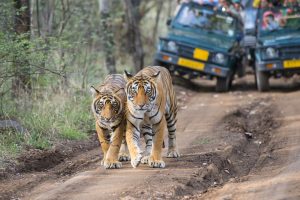
This greener environment supports different kinds of animals. The magnificent Leopard roams these hills, along with the shaggy Sloth Bear and the clever Striped Hyena. The biggest antelope in India, the Nilgai (or blue bull), is often seen here. The many types of trees and bushes in the Aravallis also attract a wide variety of birds, making it a great place for birdwatching. Various types of snakes, including pythons and cobras, live well in these rocky places. Even so, protected areas like Sariska and Ranthambore Tiger Reserves in Rajasthan, and the Jessore Sloth Bear Sanctuary in Gujarat, work hard to keep the animals and natural beauty of these important green spots safe.
The Grasslands and Wetlands: Intermediate Zones
Between the rough hills and the spread-out deserts are important in-between areas: the semi-dry grasslands and inland wetlands. These places act as key connections, linking different natural areas and supporting their own special variety of life. The grasslands in both Rajasthan and Gujarat, with their particular types of grass and scattered bushes, are vital for animals that eat plants. Here, you can see the graceful Blackbuck, a beautiful antelope known for its twisted horns, and the quick Indian Gazelle. The very rare Lesser Florican, a small bustard bird, also lives in these grasslands.
Further away from the coast, scattered across the land, are many wetlands and lakes. These act like magnets for life, especially for birds that fly long distances. Famous water bodies like Sambhar Lake in Rajasthan and Nalsarovar Bird Sanctuary and Thol Lake in Gujarat become busy bird cities during winter. Thousands of Flamingos, elegant Pelicans, and graceful Cranes come here from far-off lands, creating amazing sights. These wetlands also support rich water life and provide important places for many resident birds and other creatures to have babies and find food.
The Coastal Ecosystems: Mangroves, Mudflats, and Marine Life (Gujarat)
As we continue our journey east, the land completely changes into Gujarat’s long coastline, touching the Arabian Sea. The Gulf of Kutch and the Gulf of Khambhat are perfect examples of lively coastal areas. Here, the unique Mangrove forests stand tall, with their special roots that can live in salty water.
These “coastline protectors” play a very important natural role. They keep the shore safe from washing away, act as nurseries for young fish and shellfish, and give shelter to countless animals. Huge flat areas of mud appear when the tide is low, offering a feast for birds that walk in shallow water, while salt pans shine under the sun, important for making salt and for special tiny living things. The best part of Gujarat’s ocean life is found in the Gulf of Kutch Marine National Park. It’s home to India’s only living Coral Reefs, which are full of colorful fish and sea creatures.
The coastal and ocean wildlife is just as amazing as the land animals. The shallow waters and mudflats are a safe haven for birds, with huge groups of Greater and Lesser Flamingos making the horizon pink. You’ll also see elegant Spoonbills, various Waders (birds that walk in shallow water), Gulls, and Terns.
Under the water, the Indo-Pacific Humpback Dolphin can be seen, and if you are very lucky, the rare and gentle Dugong (sea cow) might show up. Several types of Sea Turtles come to these shores to lay their eggs, adding to the rich ocean life, while Estuarine Crocodiles live in specific river inlets. Even with all their richness, these coastal natural areas face serious dangers from pollution, fast industrial growth, and destruction of their homes. Climate change also poses a big threat, affecting sea levels and ocean temperatures.
Conservation Efforts and Ecotourism
Knowing how incredibly valuable these different natural areas are, both Rajasthan and Gujarat have done a lot to protect them. Many Protected Areas and National Parks like Ranthambore, Sariska, and Keoladeo Ghana in Rajasthan, and Gir Forest, Marine National Park, and Velavadar in Gujarat, serve as crucial safe places for animals. Beyond government actions, community-based conservation efforts are very important. They involve local people in protecting their natural heritage. Sustainable ecotourism also plays a key role, giving money reasons to protect nature and teaching visitors about its importance.
By supporting responsible tourism, these regions can make sure that their beauty and variety of life are kept safe for people in the future. For anyone thinking about India tour packages, these places offer unmatched chances for nature lovers. However, the road ahead has its challenges. Fast development, growing populations, and the effects of climate change demand ongoing effort and new ways to protect this unique variety of life.
Conclusion: The Interconnectedness of Nature
Our trip from the very hot deserts of Rajasthan to the lively coasts of Gujarat shows a deep truth: nature is a complex web, where everything is connected. The strength of desert plants and animals, the life-giving role of the Aravallis, the vital importance of grasslands and wetlands as connecting areas, and the rich abundance of coastal and ocean environments all paint a picture of amazing variety in nature.
Protecting each of these natural areas isn’t just about saving individual animals; it’s about keeping the delicate balance that allows life to continue. Rajasthan and Gujarat stand as living proof of how well nature can adapt and the urgent need for local plans to protect it. As we think about this diverse landscape, it’s a strong reminder: our continued care and dedicated protection are essential to make sure these natural wonders continue to thrive for many years to come.


